When Cameras Stop Being Passive
Most companies already paid for visibility. They just left it recording in silence. Here's what changes when cameras start helping operations instead of just storing footage.
- Published
- Aug 19, 2025
- Reading time
- 4 min read
- Written by
- Bilal Assad
Most camera systems are glorified archives
Ask a company why it installed cameras and you'll usually hear the same answer.
Security. Evidence. Insurance. Playback after something went wrong.
That all matters. But it's still a small use for a big piece of infrastructure.
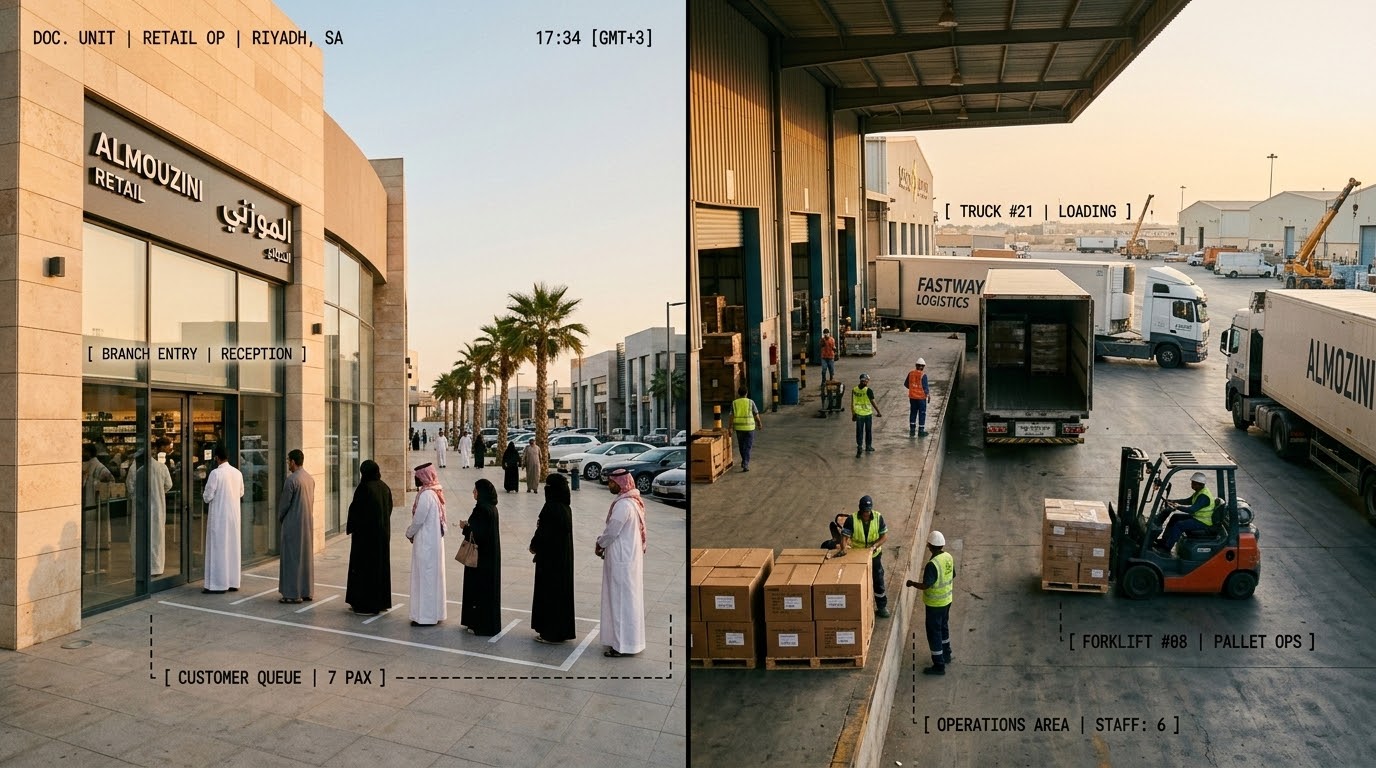
The cameras are already hanging from the ceiling. They already see the branch open, the queue build, the shelf go empty, the loading bay clog up, the safety vest disappear, the truck arrive late. Most businesses paid for all that visibility, then used it like a time machine for bad days.
We think that's waste.
The real question isn't "what happened?"
For daily operations, the better question is usually "what needs attention right now?"
Those are not the same thing.
A passive camera helps you investigate yesterday. An operational camera helps you run today.
That shift sounds small on paper. In practice, it's the difference between:
- reviewing footage after customers complained
- getting a queue alert while the line is still fixable
- discovering a repeated process miss at month-end
- seeing the pattern by the second or third occurrence
This gets obvious once the map gets dense
A single site can still run on memory, favors, and a manager who knows every corner.
Then the business grows.
One location becomes five. Five become a city. Then Riyadh isn't the whole story anymore. Then the Saudi map gets busy enough that new pins start landing beside old ones instead of out in empty space. At that point, nobody serious wants to manage by anecdotes.
You need the cameras to do more than record.
We learned that the hard way. The useful layer is not the recorder sitting in one back office. The useful layer is the operating system you build on top of the footage.
What a useful camera should actually do
We're not interested in decorative dashboards. A camera becomes useful when it helps a team act.
That usually means four things:
- It notices the event.
- It understands the event in context.
- It routes the event to the right person.
- It leaves a clean record behind.
If it only does step one, the humans are still doing the hard part.
A blunt truth
Not every problem should be automated.
Bad camera angles stay bad. Weak operating standards stay weak. If the policy is vague, the alert will be vague too. Software does not rescue sloppy management.
But a lot of checking work should disappear.
Nobody built a business because they dreamed of asking branch teams for photo proof, replaying footage to confirm a line was long, or calling three people to verify whether a loading area was blocked for twenty minutes.
That is exactly the kind of work cameras should absorb.
What changes when they do
The mood changes first.
Teams argue less about whether something happened. They spend more time deciding what to do next.
Managers stop relying on whoever shouts loudest in the group chat. Head office gets fewer polite stories and more usable facts. The branch that quietly slips every Thursday becomes visible. The site that runs well every day gets the credit it deserves.
That is the point.
We don't want cameras to feel smarter. We want the operation to feel calmer, clearer, and harder to fool.