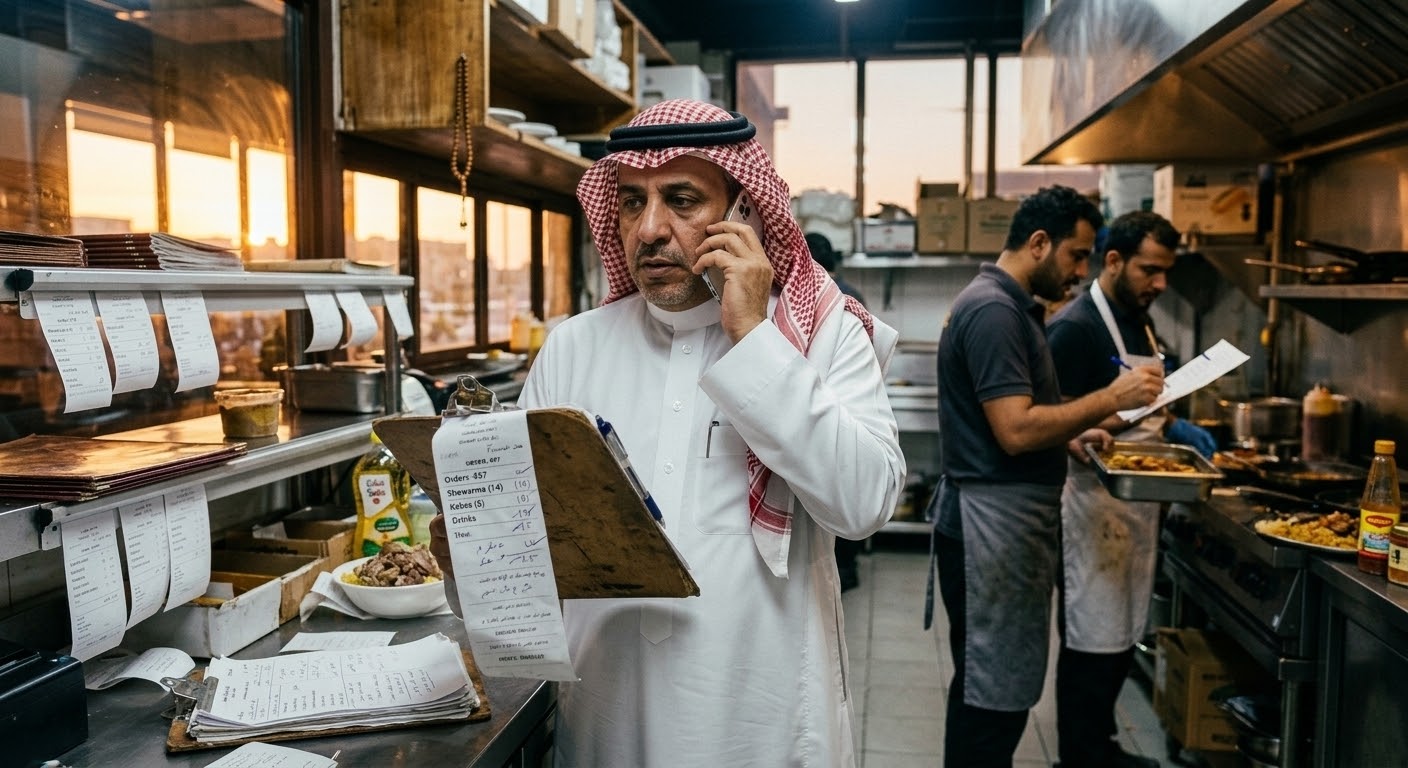
The Quiet Cost of Checking by Hand
Manual supervision looks cheap until you total the calls, visits, delays, and rework. Then it starts looking like drift with a salary.
- Published
- Apr 7, 2025
- Reading time
- 3 min read
- Written by
- Waleed Alayyad
Manual checking hides its cost well
On paper, it doesn't look dramatic.
Ask someone to verify the line. Ask someone else to check the shelf. Send a supervisor to confirm the branch opened on time. Call the warehouse. Follow up again after dhuhr. Ask for a photo. Ask for another one because the first angle was useless.
None of those steps look expensive alone.
Put them together across a week, then across a network, and the bill gets ugly fast.
The salary is only part of it
When people talk about manual supervision, they usually count the obvious cost first: wages.
Fair enough. Wages matter.
But the bigger leak is everything wrapped around the task:
- the delay before someone notices a miss
- the time spent confirming the same issue twice
- the branch interruption caused by constant follow-up
- the rework after a preventable mistake keeps repeating
- the management bandwidth lost to tiny checks
That cost rarely shows up on one invoice. It spreads itself around until it looks normal.
Repeat work expands with the company
Small teams can live on heroics for a while.
Someone remembers everything. Someone always knows who to call. Someone checks the footage personally. It feels scrappy. It can even feel efficient.
Then growth starts charging interest.
Once your Monday notes include product, field ops, support, data, customer teams, and deployment all in the same week, you get less sentimental about repeat work. Once your all-hands call stops feeling like one table and starts feeling like a small production, you learn that "we'll just check manually" is not a process. It's a debt.
The real problem is not labor
The real problem is inconsistency.
A manual check depends on who was available, who cared enough to follow through, who interpreted the standard correctly, and whether the branch felt like cooperating that day.
That means the same issue gets treated differently from one site to the next.
Operations hate that. Finance should hate it too.
What should stay human
Not everything belongs to software.
Judgment should stay human.
Escalation tone should stay human. Coaching should stay human. Decisions that affect people in meaningful ways should stay human.
But counting, confirming, chasing, and documenting the obvious? That work should be taken off the table.
A better split
The machine checks what repeats.
The human handles what requires judgment.
That's a better use of both sides.
When a camera can tell you the line crossed the threshold, the branch opened late, or the restricted zone stayed occupied too long, the manager doesn't lose authority. The manager gets time back.
This is why the economics keep changing
People sometimes think the conversation is about buying software instead of paying a checker.
That's too narrow.
The real comparison is this: do you want your best people spending the week proving that routine things happened, or fixing the routine things that keep happening?
We know our answer.
Manual checking still has a place. It just shouldn't be the operating model.